
How-to
How Long Should You Stay in an Ice Bath?
8 min read · Updated 17 June 2026
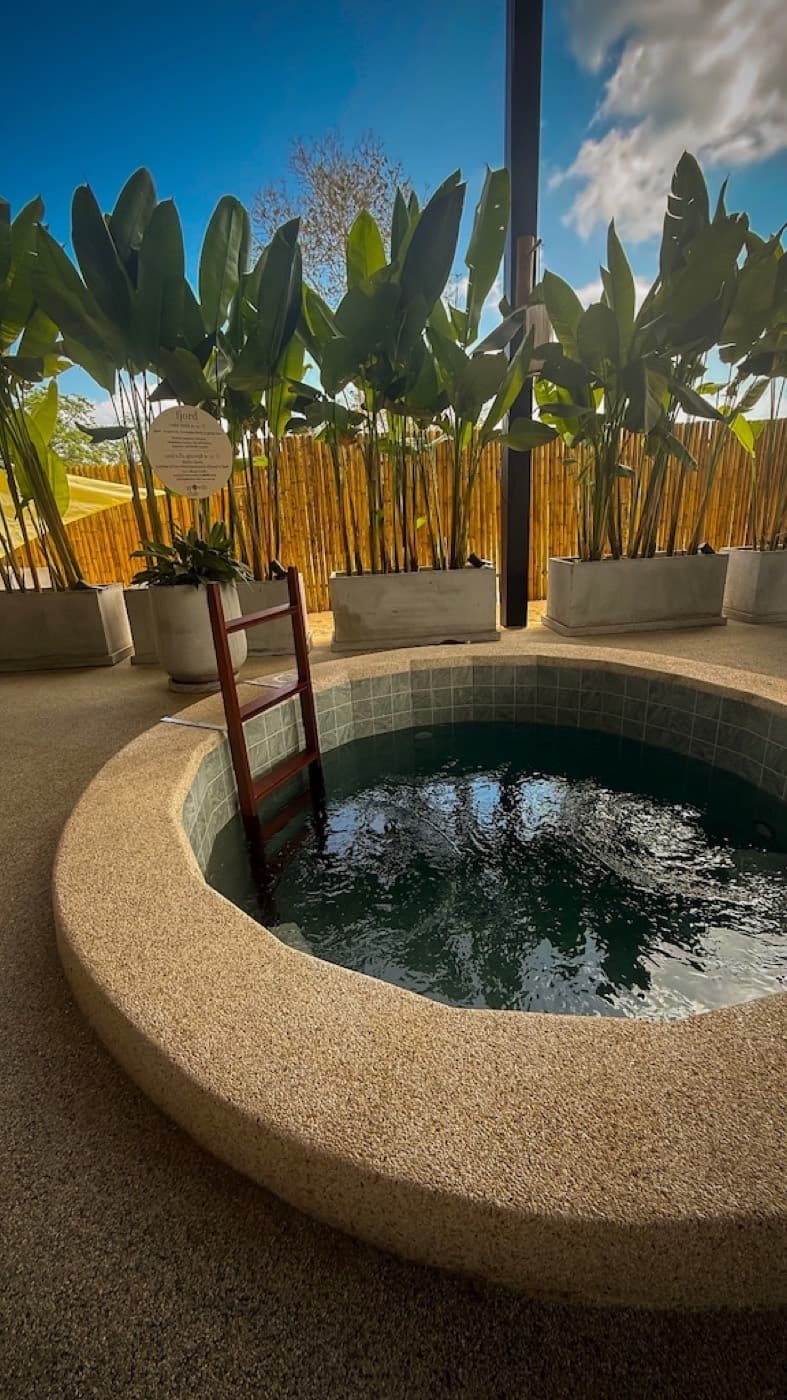
It is the first question almost everyone asks at the edge of the cold: how long am I supposed to sit in here? The honest answer is shorter than most people expect. A useful ice bath is measured in seconds and minutes, not in heroics, and the difference between a session that helps you and one that puts you at risk often comes down to a couple of minutes and a calm exhale.
This guide breaks down how long to stay in an ice bath by your goal and your experience level, explains where the popular "11 minutes a week" guideline actually comes from, and walks through the safety signals that matter more than any stopwatch. We use the cold pools at Growth Club in Ao Nang, Krabi as a concrete example, but the principles travel to any tub, barrel, or plunge.
One thing before we start: cold water is a genuine physiological stressor. The advice below is general education, not medical advice. If you are pregnant, manage a heart condition or high blood pressure, or have any cardiovascular concern, talk to your doctor before getting in, and never ice bath alone.
Key takeaways
- Beginners: 30 seconds to 2 minutes, building to 2 to 5 minutes over weeks, never in one go.
- The "11 minutes a week" figure is a cumulative weekly target across 2 to 4 sessions, not a single sitting.
- Colder water means shorter time; below 10 degrees C keep early sessions to a few minutes.
- Controlled, slow exhales are your real timer; if you cannot calm your breathing, get out.
- Rewarm gradually to manage afterdrop; never ice bath alone, after alcohol, or against medical advice.
How long should a beginner stay in an ice bath?
If this is new to you, think in seconds. A first immersion of 30 seconds to 2 minutes is plenty, and there is no prize for staying longer. The initial cold-shock response, the gasp and the urge to breathe fast, peaks in the first 30 seconds or so and then settles. Your only job at the start is to get past that wave with control, then climb out.
From there you build gradually over weeks, not in one session. Many people work up to a comfortable 2 to 5 minutes once their breathing stays calm and their hands and feet are not screaming. Warmer water buys you more time; colder water means you should stay in less time. At Growth Club the fjord plunge sits at a gentler 9 to 12 degrees Celsius, which suits first-timers, while the iskall ice bath runs a sharper 5 to 7 degrees, where sessions are naturally shorter. Staff guide first dips, which is exactly how a beginner should start.
- First ever dip: 30 seconds to 2 minutes, then out
- Building phase: 2 to 5 minutes once breathing is calm
- Warmer water (9 to 12 degrees C) allows a little longer; colder (5 to 7 degrees C) means shorter
- Add time across weeks, not within a single session
Where does the "11 minutes a week" rule come from?
You will hear the figure of 11 minutes per week everywhere, and it has a real source. It traces to work by Danish metabolism researcher Dr Susanna Soberg, whose study of regular winter swimmers identified roughly 11 minutes of total cold exposure per week, split across two to four sessions, as a threshold associated with metabolic adaptations such as brown fat activity and improved insulin sensitivity.
The key word is total and weekly. It is a cumulative target, not a single sitting. Four sessions of under three minutes each gets you there comfortably. It was also observed in healthy adults doing deliberate cold exposure, so treat it as a sensible ceiling to aim toward over time rather than a dose to chase on day one. More minutes is not automatically better, and pushing well past this offers little extra and more risk.
Temperature versus time: the tradeoff
Temperature and duration are dials you trade against each other. The colder the water, the shorter you stay, because cold accumulates a thermal and cardiovascular load fast. A few minutes at 10 degrees feels manageable; the same few minutes at 5 degrees is a meaningfully bigger stressor.
A practical rule of thumb: in water below 10 degrees Celsius, keep early sessions under a handful of minutes and let acclimatisation, not willpower, extend them. You do not need extreme cold to get a response. Soberg defines cold as roughly 15 degrees and below, so a moderate plunge still counts. Whatever the temperature, the moment shivering becomes uncontrollable or you stop feeling cold at all, the session is over.
Breathe first: the technique that controls the clock
Your breath is the real timer. When you enter the water, the cold-shock response triggers an involuntary gasp and rapid breathing. Fighting it raises panic; controlling it is the whole skill. Before you get in, take a few slow breaths. As you immerse, resist the gasp, then settle into long, slow exhales, making the out-breath longer than the in-breath.
A calm, controlled exhale is the signal that you are managing the stress rather than being managed by it. If you cannot get your breathing under control within the first 30 to 60 seconds, that is your cue to get out, not to tough it out. The goal is composed cold, not a contest.
Warning signs: when to get out immediately
A stopwatch is a guide; your body is the authority. Get out straight away, regardless of how much time is on the clock, if you notice any of the signs below. Hyperventilation that you cannot calm, intense chest tightness, dizziness, or numbness that turns into a loss of dexterity are all reasons to end the session now.
Two situations carry extra risk. Uncontrollable, violent shivering means your body is losing the thermoregulatory battle. And paradoxically, if you stop feeling cold or feel suddenly euphoric and sleepy, that can be a red flag rather than a sign of progress. When in doubt, get out. This is also why you never ice bath alone, and why alcohol and cold water are a dangerous mix: alcohol widens blood vessels, speeds heat loss, and dulls your ability to notice these warnings.
- Hyperventilation you cannot bring back under control
- Chest pain or tightness, palpitations
- Dizziness, faintness, or confusion
- Numbness progressing to loss of hand or foot control
- Violent, uncontrollable shivering
- Stopping feeling cold, or sudden drowsiness or euphoria
How do you warm up after an ice bath?
How you rewarm matters as much as the dip itself, partly because of a phenomenon called afterdrop. During immersion your body shunts blood to the core; when you get out, cold blood from your limbs circulates back inward and your core temperature can keep falling for several minutes after you are dry. That is why you may shiver harder five minutes out than you did in the water.
The safe approach is gentle, gradual rewarming. Dry off, add layers, and let your body generate its own heat through light movement. Resisting the urge to jump straight into a scalding shower is wise, because forcing rapid vasodilation can worsen afterdrop. At Growth Club, many people drip-dry on the grounding lawn, do a few easy squats or arm swings, and let the warm Krabi air do the work. A warm drink helps from the inside. If you want heat, the geysir hot bath at 40 to 42 degrees is there, but ease in rather than plunging from one extreme to the other.
How often per week should you ice bath?
Frequency is where the 11-minute target becomes practical. Spreading cold exposure across two to four short sessions a week is a sensible pattern for most people and lines up with how the metabolic research was structured. Daily exposure is not necessary, and rest days are not a failure.
Timing around training is worth a note. Cold immersion straight after strength or hypertrophy workouts may blunt some of the muscle-building adaptations you trained for, so if growth is the goal, many people separate the cold from the lifting by several hours or save it for non-lifting days. For general wellbeing, mood, and recovery from general fatigue, a few well-managed short sessions across the week is a reasonable and sustainable rhythm.
Frequently asked
Yes. Staying too long, especially in water below 10 degrees C, raises the risk of hypothermia, loss of dexterity, and impaired judgement. Watch for uncontrollable shivering, numbness, dizziness, or no longer feeling cold, and get out immediately if they appear, regardless of the clock.
Beginners often start waist or chest deep and immerse further only as they acclimatise. Deeper immersion is a bigger stressor on breathing and circulation, so build up gradually and keep your breathing controlled at every depth.
Not necessarily better, just different. Colder water delivers a stronger stimulus faster, which is why you stay in for less time. There is no clear evidence that chasing extreme cold beats a moderate, well-managed plunge for general wellbeing.
It is not recommended. Cold shock and afterdrop can affect breathing and coordination quickly, so a second person should always be present. At a facility like Growth Club, staff supervise and guide first-timers through their dips.
Is Growth Club right for you?
See how the sauna and ice bath in Ao Nang fit your reason for going:
Sources
- Soberg et al., Cell Reports Medicine (winter swimmers, cold exposure and metabolism)
- Huberman Lab: The Science and Use of Cold Exposure for Health and Performance
- Cold shock response: rapid habituation (NCBI)
- Mechanism of afterdrop after cold water immersion (PubMed)
This article is for general information only and is not medical advice. Cold and heat exposure carry risks — consult a doctor before starting if you have any health condition.
Keep reading
 Science
Ice Bath Benefits: What Cold Water Really Does
A clear, evidence-based look at what ice baths actually do for recovery and mood, what is overhyped, and who should be cautious.
8 min read → How-to
Contrast Therapy: The Hot–Cold Ritual, Explained
A clear, evidence-honest guide to contrast therapy: the hot-cold physiology, a step-by-step protocol, real benefits, common mistakes, and session flow.
9 min read →