
Local guide
Muay Thai Recovery in Krabi: A Fighter’s Guide
8 min read · Updated 17 June 2026
Krabi has quietly become one of Thailand’s best places to train Muay Thai. The limestone scenery is dramatic, the camps are serious, and Ao Nang gives you a real town to live in between sessions. But anyone who trains twice a day quickly learns the same lesson: the training is only half the work. What you do in the hours between sessions decides whether you show up fresh or show up wrecked.
This guide is written for fighters and hobbyists training in and around Ao Nang — whether you are doing a one-week camp or a three-month stay. We cover why recovery matters, what cold and heat may and may not do, the sleep and nutrition basics that move the needle most, and where to actually go to reset. We have tried to stay honest about the physiology and hedge where the science is still unsettled.
Key takeaways
- Recovery is part of the training program, not an afterthought — it decides whether you train well, repeatedly.
- Cold immersion is associated with reduced soreness and fatigue for a day or two; use it after hard sessions, not every drill.
- Heat and contrast work may help you relax, loosen up and sleep; treat the soreness benefits as suggestive, not guaranteed.
- Sleep, hydration, fuel and easy movement matter more than any single gadget.
- Growth Club, next to the Krabi International Boxing Stadium, is the convenient cold-and-heat recovery spot fighters use between sessions.
Why does recovery matter between sessions?
Muay Thai is uniquely demanding. A typical camp day stacks running, pad work, bag work, clinching and sometimes sparring — often twice a day in tropical heat. That volume creates a constant cycle of micro-damage, fatigue and adaptation. You do not get stronger or sharper during the session; you adapt afterwards, when the body has the resources and the rest to rebuild.
Skip recovery and the deficit compounds fast. Sleep debt, dehydration and accumulated soreness blunt your timing, slow your reactions and raise your injury risk — exactly the things that ruin a camp. The goal is not to train as hard as possible on any single day; it is to be able to train well, repeatedly, for the length of your stay. Treating recovery as part of the program, not an afterthought, is what lets you absorb the work.
What can cold do for sore muscles?
Cold water immersion is the most popular recovery tool in combat sports, and the evidence is genuinely encouraging for one specific job: reducing the soreness and perceived fatigue that follow hard training. Reviews and trials suggest that a cold plunge after exercise is associated with reduced delayed-onset muscle soreness (DOMS) and lower perceived fatigue in the hours and day or two afterwards, likely via vasoconstriction, reduced tissue temperature and a mild analgesic effect.
A few honest caveats. The effect on soreness is real for many people but modest, and it does not heal injuries — it manages symptoms. There is also evidence that heavy, habitual cold immersion straight after strength or hypertrophy work may blunt some long-term muscle adaptations. For a fighter mid-camp whose priority is showing up tomorrow, that trade-off usually favours the plunge; for someone whose main goal is building maximum muscle, the timing matters more. Use it to take the edge off after a brutal session, not reflexively after every light technical drill.
- May reduce DOMS and perceived soreness for roughly 24–48 hours after hard training
- Best used after intense or high-volume sessions, not every light drill
- Keep sessions short and listen to your body — it manages symptoms, it does not fix injuries
And what about heat — sauna and hot baths?
Heat plays a different role. Sauna and hot immersion are associated with relaxation, increased blood flow and a parasympathetic “wind-down” response that many athletes find helps them sleep and feel looser the next morning. Regular sauna use has also been linked in observational research to cardiovascular and general health markers, though those are population associations rather than proof for any individual.
For fighters, the most reliable wins from heat are practical: it loosens stiff hips and shoulders, it is a calm place to decompress after a hard day, and it pairs naturally with cold. Alternating hot and cold — contrast therapy — has some evidence for reducing soreness as well, with the idea that the back-and-forth acts as a vascular pump to flush metabolic by-products. The science here is suggestive rather than settled, so treat contrast work as a tool you trial and judge by how you feel and perform, not a guaranteed edge.
The basics that matter most: sleep, food, mobility
Before any plunge or sauna, the unglamorous fundamentals do the heavy lifting. Sleep is the single biggest recovery lever there is — it is when most tissue repair and consolidation happens, and a camp without enough of it falls apart by day four. In Ao Nang heat, that means a cool, dark, quiet room and protecting your nights.
Nutrition and hydration come next. Tropical training means heavy sweat losses, so rehydrating with water and electrolytes is non-negotiable, and getting enough protein and carbohydrate across the day supports both repair and the energy to train again. Finally, gentle mobility and easy movement on rest days — walking, light stretching, mobility flows or a relaxed yoga class — keeps you loose without adding fatigue.
- Sleep: prioritise 7–9 hours in a cool, dark room — the biggest single lever
- Hydration: replace fluids and electrolytes lost to heavy tropical sweat
- Fuel: enough protein and carbohydrate across the day to repair and re-energise
- Move easy: light mobility, walking or gentle yoga on rest days, not more hard work
The Ao Nang and Krabi Muay Thai scene
Krabi has a real fight culture, not just tourist shows. Ao Nang hosts several camps and stadiums, and the Krabi International Boxing Stadium runs international fight nights that draw both Thai and visiting professionals. Whether you are training at a dedicated camp or dropping into group classes, you are surrounded by people who take the sport seriously, which raises the level of everyone’s training.
Most visitors build a rhythm: morning session, eat, recover through the heat of the day, then an afternoon or evening session, with fight nights at the stadium to watch on the calendar. That midday gap — the recovery window — is the part most newcomers waste. Used well, it is the difference between a camp you finish strong and one you limp out of.
Where do fighters recover in Ao Nang?
Growth Club sits right next to the Krabi International Boxing Stadium at 1380 Moo 2, Ao Nang, which makes it the natural place to recover between sessions — you can step off the mats and into the cold without a commute. Fighters training in the area repeatedly point to it as the recovery spot, and it carries a 5.0-star rating from 230-plus reviews.
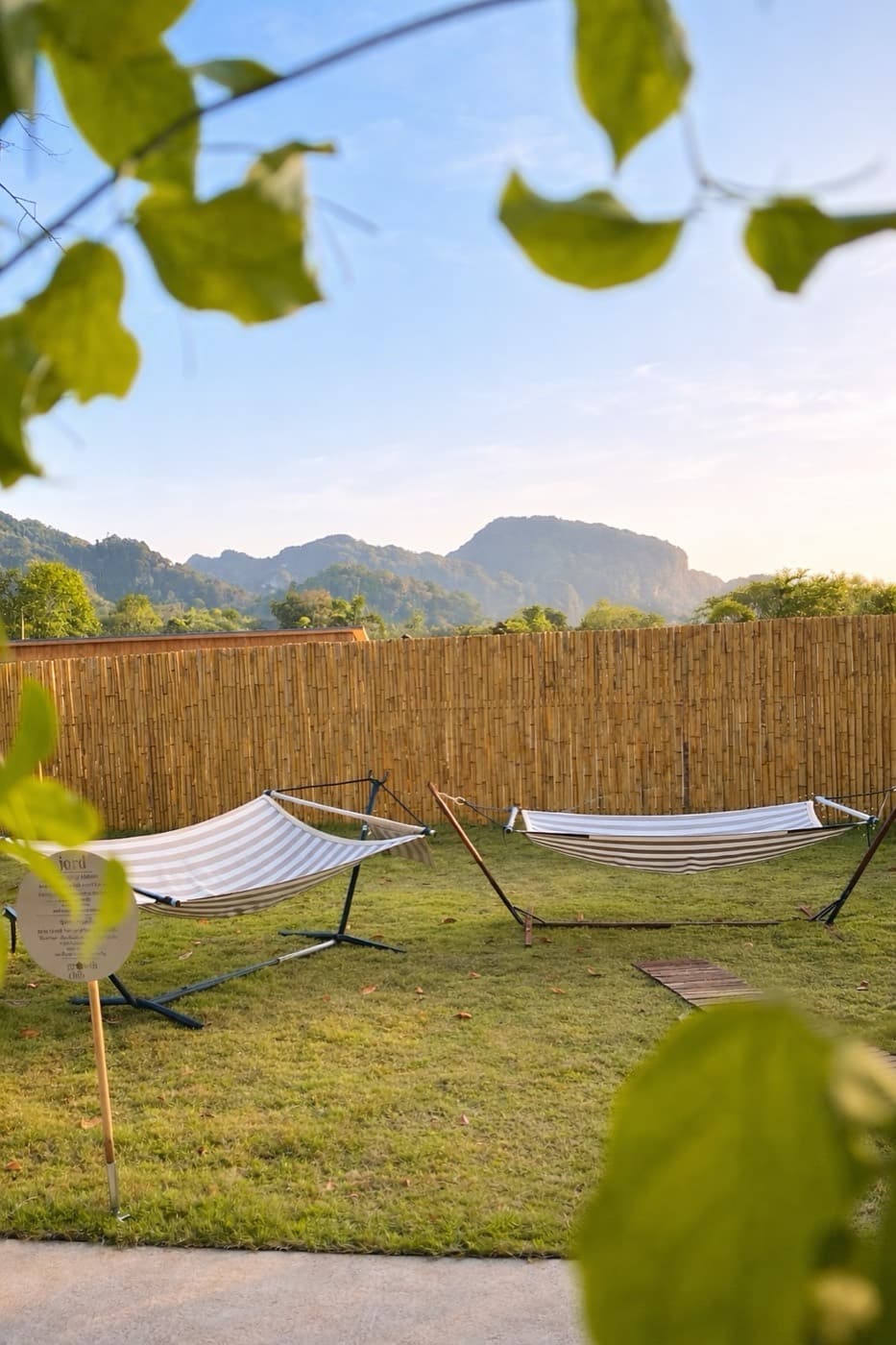
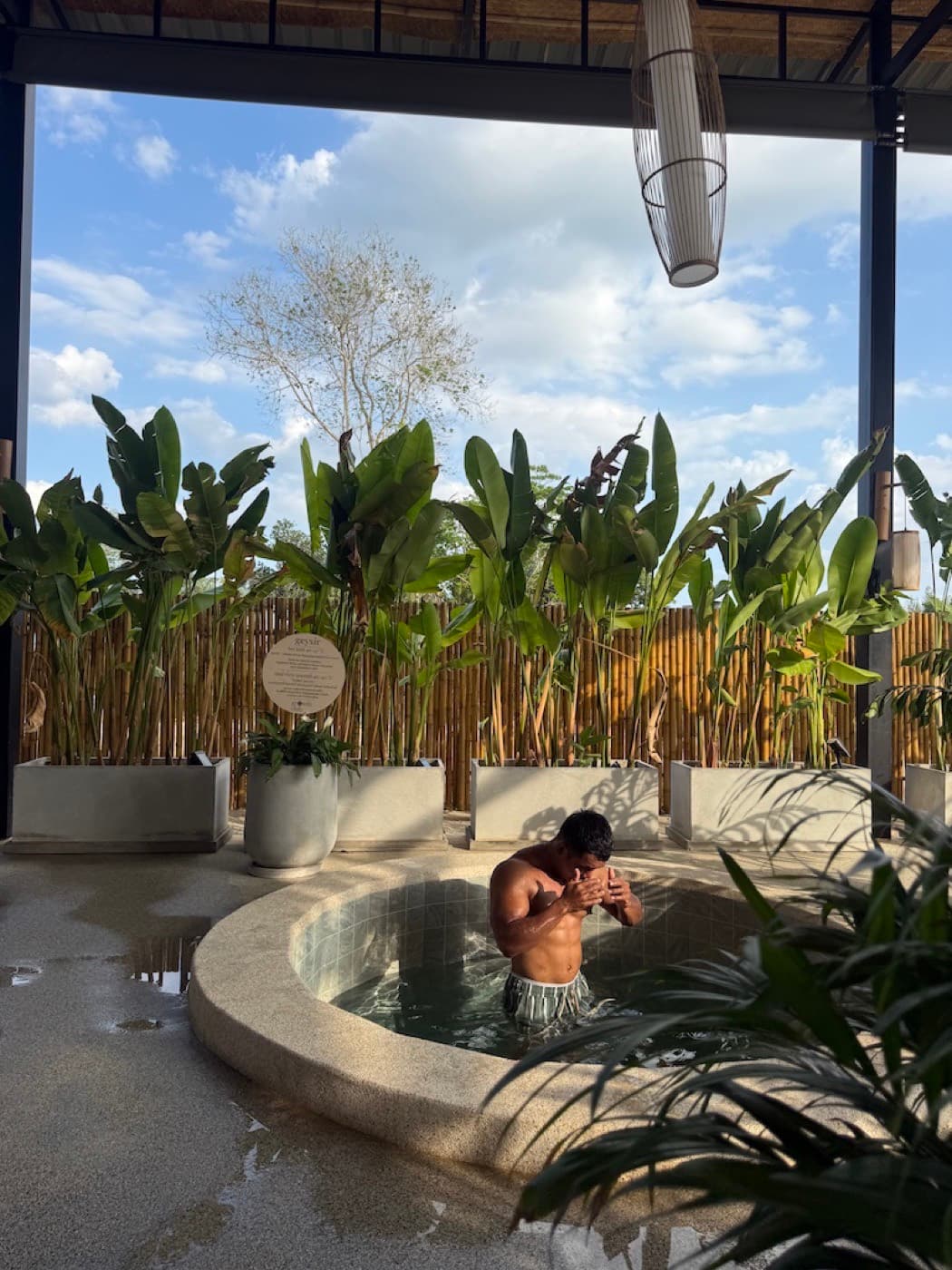
The setup is built for exactly the cold-and-heat protocol above. There are two cold options — the iskall ice bath at 5–7°C for a sharp post-session plunge and the gentler fjord cold plunge at 9–12°C — plus three heat options to contrast with: an 80°C Finnish sauna, a 45°C house of steam and a 40–42°C geysir hot bath. There is also a grounding lawn to lie out on, a healthy café for refuelling, and yoga on Tuesday, Thursday and Saturday at 10:30am — which lands neatly in the midday recovery window. A day pass is ฿400, and it is open daily 8am–10pm, so it flexes around both morning and evening training.
- Next to the Krabi International Boxing Stadium — no commute between mats and cold
- iskall ice bath 5–7°C and fjord cold plunge 9–12°C for post-session cold
- Finnish sauna 80°C, house of steam 45°C, geysir hot bath 40–42°C for heat and contrast
- Yoga Tue/Thu/Sat 10:30am, grounding lawn, healthy café; day pass ฿400; open daily 8am–10pm
Frequently asked
Not necessarily. Cold immersion is most useful after intense or high-volume sessions to take the edge off soreness. After light technical work it is optional, and reflexive cold after every session may slightly blunt some long-term adaptations, so save it for when you genuinely need it.
Yes. Growth Club is right next to the Krabi International Boxing Stadium at 1380 Moo 2, Ao Nang, so you can move straight from training into the ice bath, sauna or cold plunge without a commute.
The midday gap between morning and evening sessions is your main recovery window. Eat, hydrate, rest through the heat, and use cold, heat or a gentle yoga class then. Growth Club’s 8am–10pm hours and 10:30am yoga fit that window.
No. Cold immersion manages symptoms — it is associated with reduced soreness and perceived fatigue — but it does not heal strains, sprains or other injuries. Treat genuine injuries with proper rest and, where needed, medical assessment.
Is Growth Club right for you?
See how the sauna and ice bath in Ao Nang fit your reason for going:
Sources
- Cochrane review — cold-water immersion for muscle soreness after exercise (PMC)
- Dose of cold water immersion for exercise-induced muscle damage: a network meta-analysis (Frontiers in Physiology)
- Krabi International Boxing Stadium — Ao Nang fight nights
- Ao Nang Krabi Stadium — Muay Thai training information
This article is for general information only and is not medical advice. Cold and heat exposure carry risks — consult a doctor before starting if you have any health condition.
Keep reading
 How-to
Contrast Therapy: The Hot–Cold Ritual, Explained
A clear, evidence-honest guide to contrast therapy: the hot-cold physiology, a step-by-step protocol, real benefits, common mistakes, and session flow.
9 min read →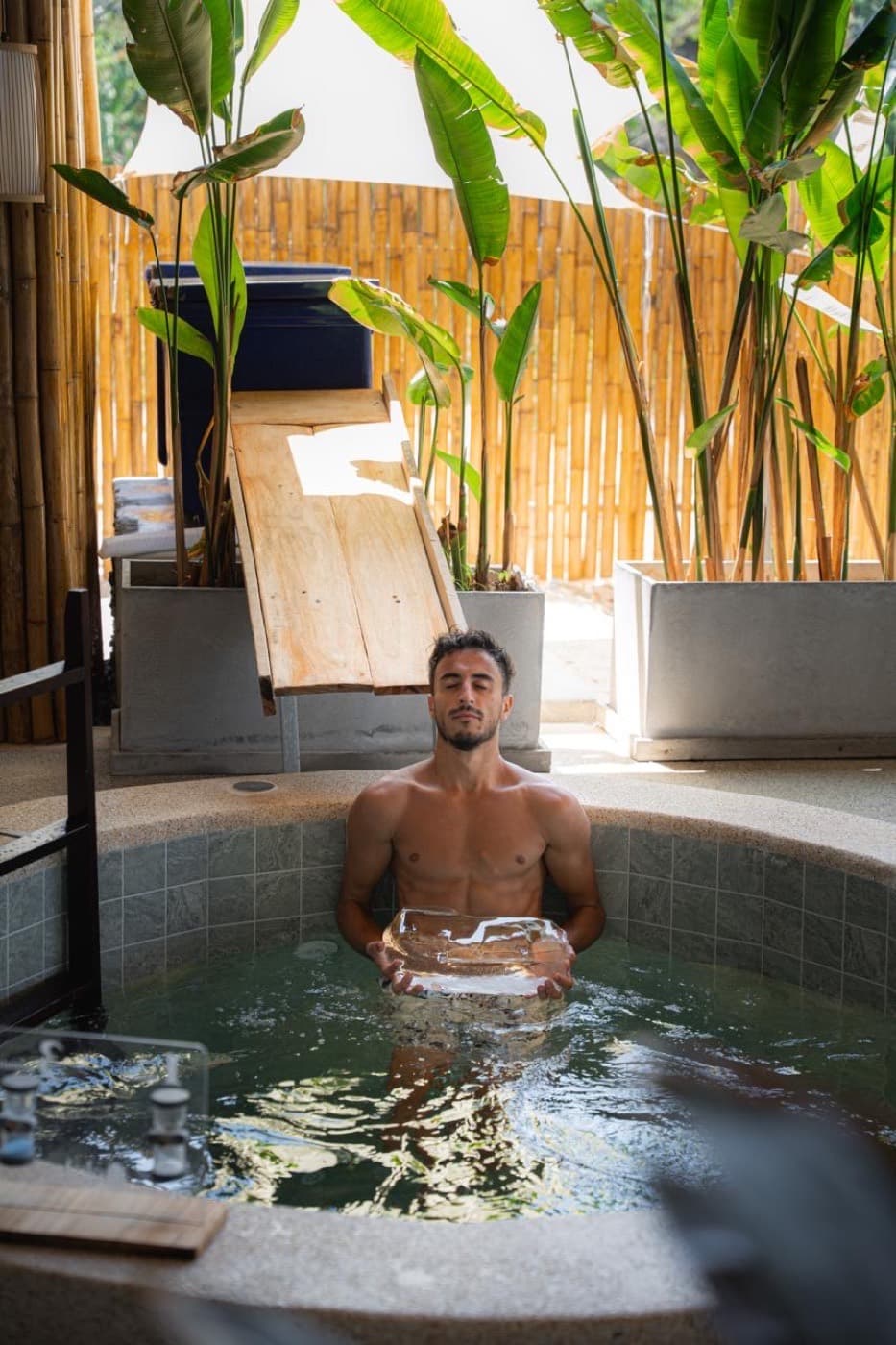 Science
Ice Bath Benefits: What Cold Water Really Does
A clear, evidence-based look at what ice baths actually do for recovery and mood, what is overhyped, and who should be cautious.
8 min read →